Do women lead, connect and share differently? Subscribe for the latest stories.

50 years after Australia’s historic ‘equal pay’ decision, the legacy of ‘women’s work’ remain

Source:
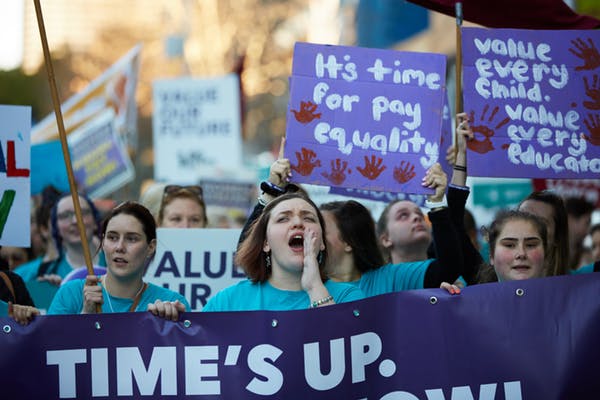
June 19, 2019 is the 50th anniversary of Australia’s industrial relations system endorsing the principle of “equal pay for equal work”. Yet, five decades on, a gender pay gap remains. The 1969 decision was a breakthrough, but also highlighted the problem of putting principle into practice, given a legacy of past decisions being based on clear notions of “male” and “female” jobs. While various factors contribute to the overall gender pay gap, about 30% is due to gender concentrations by industry and occupation.

Ghana’s market women were once so powerful they were targeted by the military

Source:
There are corporate-feeling malls and glossy supermarkets popping up all over the West African country. Still, more than 90 percent of people here still do their almost all their shopping at open-air markets, where the stalls are dominated by women, each running a small business. It’s an encouraging trend, but behind this bright statistic is a dark history: during Ghana’s military coups of the 1970s and 1980s, market women became the target of government terror, blamed for an economic crisis gripping the country. To understand why that could have happened, you have to first see the marke

Women World Cup champs win waaaaay less money than men

Source:
The U.S women's World Cup team are champs. But they're being paid far less than men on losing teams. The women's team won $2 million from FIFA for winning this year's tournament. Last year, the German men's team collected $35 million after winning the 2014 World Cup. That works out to a little less than 6 cents on the dollar. In fact the 16 men's teams that were eliminated in the first round of last year's World Cup each got $8 million, or four times as much as the championship women. The U.S men's team, which finished 11th, won $9 million.

Women Must Get Pregnant ‘On Schedule,’ Chinese Company Tells Staff

Source:
How much say should an employer have over when — and whether — an employee gets pregnant? That’s the question Chinese Internet users were debating Friday after a controversial notice from a company in central Henan province to employees went viral on China’s social networks. According to the notice, a copy of which was published online by the Dahe Daily provincial newspaper, married women working at the Jiaozuo city credit cooperative must be on the job for one year before they are allowed to apply to have a child. They must also schedule their pregnancy in advance so as no

Women reveal all the sexist questions they’ve been asked at job interviews

Source:
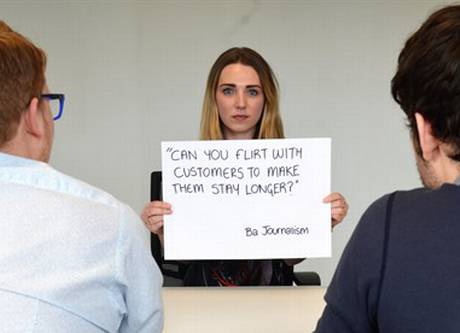
As part of a photo series by employment law firm Thomas Mansfield, university graduates were asked to reveal the weirdest and most offensive questions they’ve been asked while interviewing for jobs. Unsurprisingly, a lot of the women’s responses proved just how prevalent gender discrimination in the workplace continues to be. From inquiries about how willing they would be to flirt with customers, to requests for them to wear more make-up, to asking whether or not they get PMT (and, presumably, PMS), the questions got intimate and very inappropriate. “Unfortunately, the experience o

Women in the world: Where the U.S. falters in quest for equality

Source:
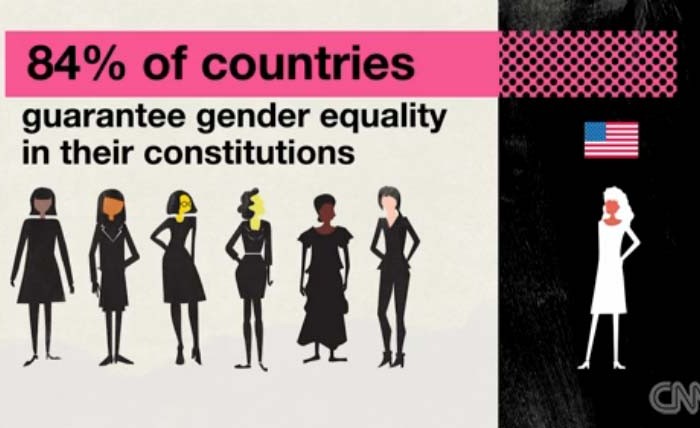
It's considered an "international bill of rights for women." It promises to end discrimination, establish equality and fight against violence. Nearly all the 193 member states of the United Nations have ratified it. Only seven haven't: Iran, Palau, Somalia, South Sudan, Sudan, Tonga. And the United States. The Convention on the Elimination of Discrimination against Women -- or CEDAW, as it's known -- was adopted by the United Nations in 1979. It's the biggest treaty creating specific guarantees for women and girls since the Universal Declaration of Human Rights was established in 1948, when

Sebi barks but does not bite: Companies with no women directors only have to pay Rs 50k fine

Source:
Indian market regulator Sebi's move to get listed Indian companies to include women on its board of directors has met with mixed results with most firms choosing to merely install women relatives on the board instead of making an effort to fill the posts on merit, thereby nullifying the purpose of the law. But it now transpires that they may not have needed to even bother with that, because the penalty for non-compliance is laughably lenient. Those who've failed to meet the regulator's ditkat, will face a four-stage penalty structure under which firms will be fined a paltry Rs 50,000

Read the world's local women's news


How does Femina work?

  • Step 1
    1
    Local Country Editors From Around the World
  • Step 2
    2
    Choose News Articles From Their Countries’ Local Language Papers
  • Step 3
    3
    Summarize & Contextualize The Stories In English

Got it!

Swipe for more Top Stories


Got it!