Do women lead, connect and share differently? Subscribe for the latest stories.

The former child soldier turned star athlete blazing a trail for women in Nepal

Source:
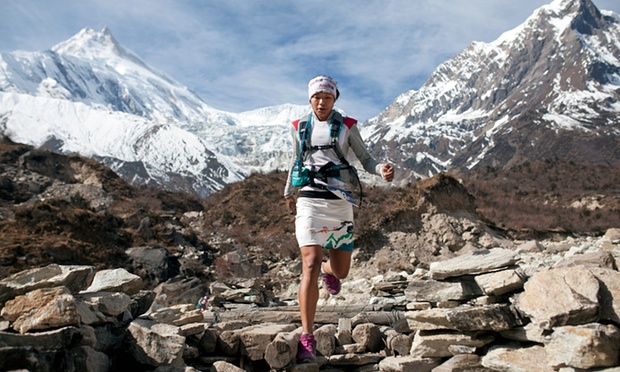
Mira Rai is a low-profile type of national hero. When she walked through Nepal’s crowded international airport last week, no one made much of a fuss. On the streets of Kathmandu, the south Asian nation’s capital, more people notice the brightly coloured, brand new sports clothes than the slight 25-year-old who wears them. The anonymity may not last long. Eighteen months ago, Rai was just another young Nepalese from a desperately village who grew up never sure of two, let alone three meals in a day. Now the former Maoist child soldier is winning international races in one of the world’
Here’s how two girls from Nepal brought attention to the inequality facing women around the world

Source:
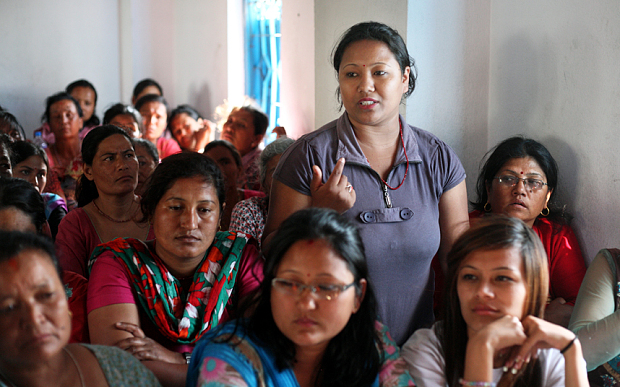
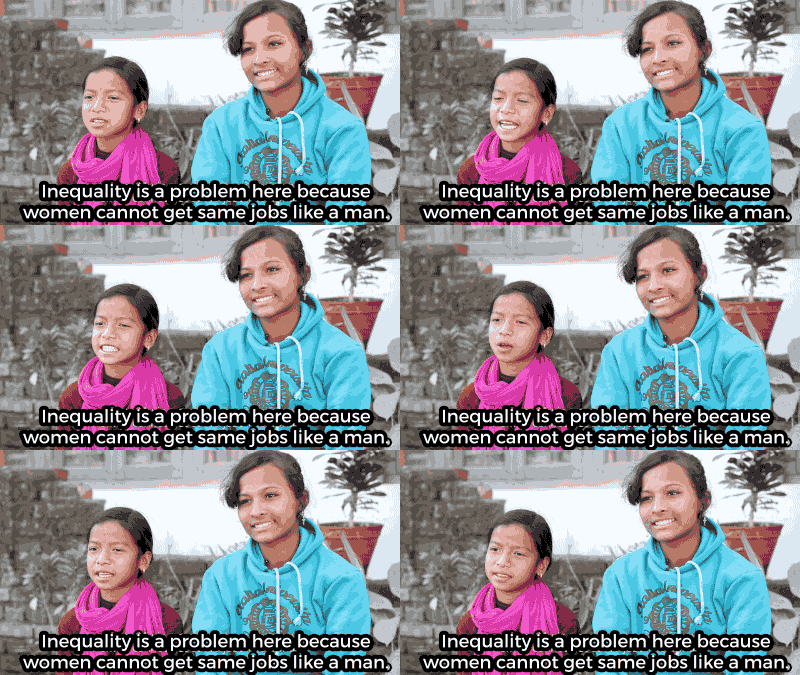
Students Jharana and Sirjana were tired of gender inequality, so they made a plan. In their home country of Nepal, women are far less likely than men to be educated. While today's generation of girls is receiving at least a basic education (91% of girls attend primary school), they're still viewed as being "less than" men when it comes to looking for a career. To raise awareness of the inequality facing Nepalese women in education and career opportunities, they began recruiting classmates to participate in a 5k run for women's equality. 350 runners took part in the 5k, making it a run

Nepali women at the forefront of improving community water, sanitation services

Source:
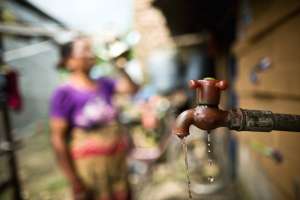
In Nepal, women and girls are the primary collectors, transporters and managers of the household water supply. Water sources in many areas are located far from their houses, and although the situation has improved over the last decade, women in remote rural areas must walk for 4-5 hours just to fetch water. Women are also responsible for family hygiene and sanitation in villages where houses often lack toilets and open defecation is practiced, making residents—and especially children—susceptible to water-borne and sanitation related diseases. Women’s exclusion from community resou

Nepalese women in refuge camps are battling cultural taboos around periods

Source:
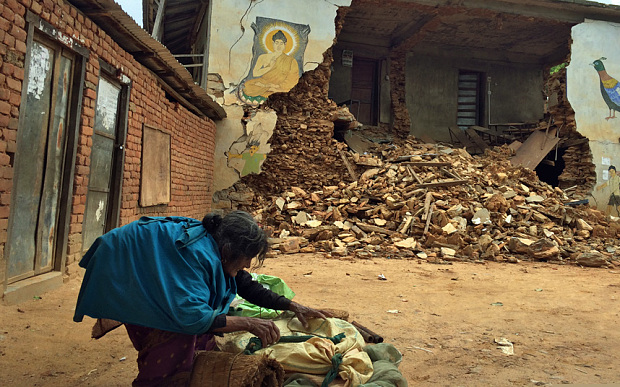
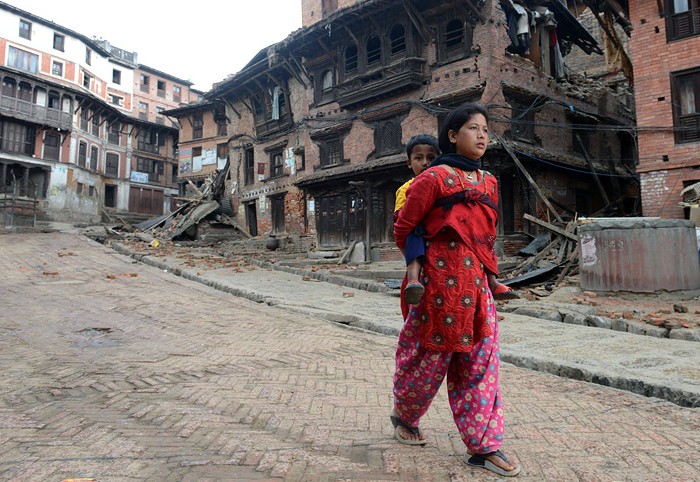
It was just over a month ago today that the first devastating Nepal earthquake hit, killing thousands and leaving ruin in its wake. Almost 9,000 people died and the survivors had their lives completely altered. Many have taken refuge from dangerous buildings in camps set up outside their villages, where they’re living in crowded makeshift tents. For Nepalese women this brings with it its own set of specific problems – particularly at a certain time of the month. Traditionally, in Nepal, when women have their periods, they sleep alone – not even in the same bed

Manisha Koirala to Help Displaced Women in Quake-Hit Nepal as UN Goodwill Ambassador

Source:
Bollywood star and social activist Manisha Koirala has announced her support for the UN Population Fund (UNFPA) as its Goodwill Ambassador for Nepal to work for pregnant women, new mothers and their infants, girls and young people displaced by the devastating earthquake of April 25. "I am truly happy to renew my partnership with UNFPA in my homeland at this crucial time," said Manisha in a statement, adding that UNFPA's life-saving interventions were needed more than ever. More than two million women of reproductive age are affected by the disaster. Many of them are at risk of unwanted p

Meet the amazing women rebuilding communities in Nepal

Source:
Sarita Devi*, a 50-year-old widow in the Gorkha district of Nepal has taken on the task of clearing the rubble at the boarding school next door to where she lives. Her own house still stands after the earthquake, but the school was severely damaged. There are gaping holes in the walls so that as you stand outside you can read what’s written on the blackboards. There is no relief coming into this village yet - the first tranche is going only to 'severely affected' areas and Gorkha has been classified as 'moderately affected'. Devi has no official connection with the school but sh

Women are fearlessly leading relief efforts in Nepal, less than a week after worst earthquake in 80 years

Source:
As the death toll continues to climb past 5,000 in Nepal following the 7.8-magnitude earthquake that hit on Saturday, Global Fund for Women is standing in solidarity with women on the ground who are fearlessly leading rescue efforts in the face of this devastation Global Fund for Women’s partners are already responding to the needs of women and children in Nepal and India. Our partners – local, women-led groups – are deeply rooted in the communities they serve. They know the specific needs of women after a crisis – needs that most relief efforts overlook, such as supplying sanitar

Mendham woman’s orphanage in Nepal safe after massive earthquake

Source:
The Mendham woman who founded an orphanage and school for children in Nepal is safe — as are the school's students. BlinkNow, which supports the Kopila Valley Children's Home & School in Surkhet, Nepal, said on its Facebook page Saturday those at the schools only felt a small bit of the 7.9 earthquake that's killed thousands. "A 7.9 earthquake just hit the Kathmandu region of Nepal," BlinkNow wrote at the time. "We felt only a little bit of it here in Surkhet; we're hundreds of kilometers away. All of our kids, our buildings, and our community are safe. Our heart goes out to everyo

M for Nepal

Source:
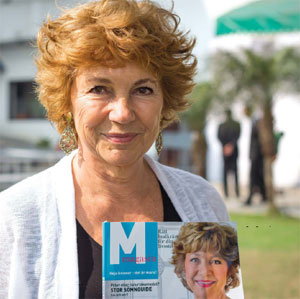
Amado contributes a fifth of her magazine newsstands sales to UNICEF Nepal She may feature regularly on the cover of Swedish women’s magazine M-Magasin, but 68-year-old Amelia Amado refers to the Tharu women of Eastern Nepal as the most beautiful women she has seen in her life. She credited that to the women’s resilience in the face of poverty, long hours in the fields and taking life as it comes. “Up in the mountains, you really feel that women have a tough life, they have to carry heavy loads up and down mountains, they have to get up and work in the fields shortly after givin

Read the world's local women's news


How does Femina work?

  • Step 1
    1
    Local Country Editors From Around the World
  • Step 2
    2
    Choose News Articles From Their Countries’ Local Language Papers
  • Step 3
    3
    Summarize & Contextualize The Stories In English

Got it!

Swipe for more Top Stories


Got it!