Do women lead, connect and share differently? Subscribe for the latest stories.

Brazil slashes red tape to expedite scientific research

Source:
Brazilian President Dilma Rousseff signed into law on Monday a measure eliminating bureaucratic obstacles to scientific research and aiming to promote innovation and production of technology in South America's largest economy. The new legislation "will have extraordinary impact on competitiveness and productivity," she said during the signing ceremony in the presidential palace. The National Code of Science, Technology and Innovation was passed by Congress last month.
Argentina Has More Women in Science—But It Hasn’t Fixed Sexism

Source:
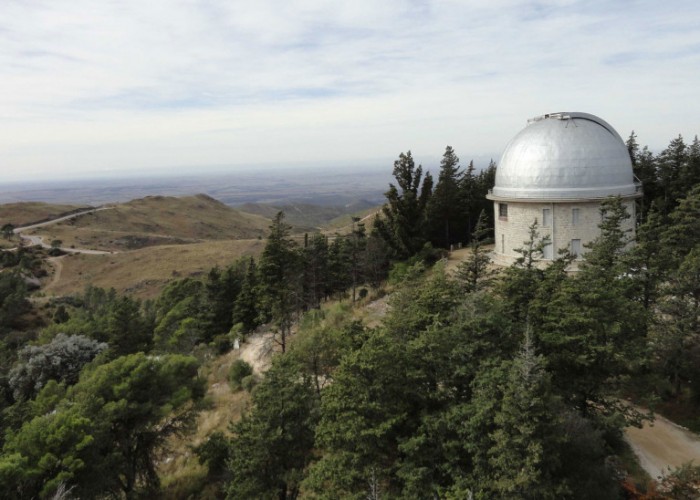
Argentina looks like the most female-friendly place in the world for astronomers. A full 39 percent of professional astronomers there are women, which, yes, passes for remarkable when the number hovers in the teens or below in most of the rest of the world. So what’s going on in Argentina, a country which female scientists there describe as still having “‘machismo’ in the air”? I first began asking this question to astronomers—Argentinian and otherwise—after news broke that renowned UC Berkeley astronomer Geoff Marcy had been sexually harassing female students for decades. The

Peruvian invents drone to measure air contamination

Source:
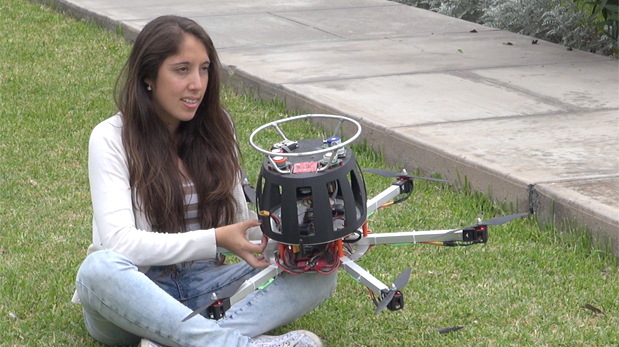
Young Peruvian engineer, Monica Abarca, recently won the Global Impact Competition for her creation of a drone that detects air contamination. “The drone was designed from scratch as part of my thesis,” Monica said. “Its mission is to measure contamination (through gas and particle sensors) and radioactivity.” Monica explained that drones could replace stationary facilities at mines used to measure contamination. They would cover a greater distance, detect air quality faster and more effectively, as a way to protect nearby villages.

The Bolivian women who knit parts for hearts

Source:
Traditional craft skills are helping to save the lives of children born with heart defects in Bolivia. The indigenous Aymara women have centuries of experience of knitting and weaving distinctive woollen hats, sweaters and blankets. Now, they are applying their expertise to a hi-tech medical product - which is used to seal up a "hole in the heart" which some babies are born with. "We are very happy, we are doing something for someone so they can live," says knitter Daniela Mendoza, who weaves the tiny device in a special "clean room". It takes her about two hours to make the Nit Occl

Read the world's local women's news


How does Femina work?

  • Step 1
    1
    Local Country Editors From Around the World
  • Step 2
    2
    Choose News Articles From Their Countries’ Local Language Papers
  • Step 3
    3
    Summarize & Contextualize The Stories In English

Got it!

Swipe for more Top Stories


Got it!