Do women lead, connect and share differently? Subscribe for the latest stories.

Brazil slashes red tape to expedite scientific research

Source:
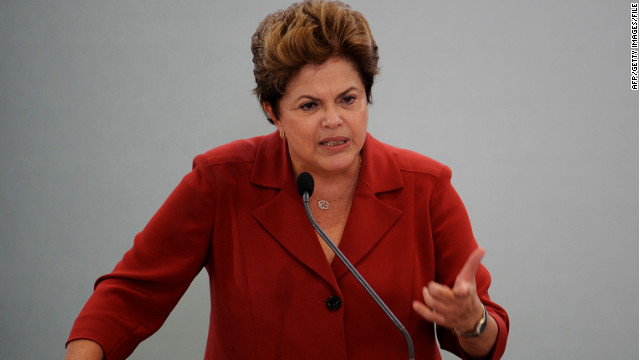
Brazilian President Dilma Rousseff signed into law on Monday a measure eliminating bureaucratic obstacles to scientific research and aiming to promote innovation and production of technology in South America's largest economy. The new legislation "will have extraordinary impact on competitiveness and productivity," she said during the signing ceremony in the presidential palace. The National Code of Science, Technology and Innovation was passed by Congress last month.
Native Women Bring Solar Energy to Chile’s Atacama Desert

Source:
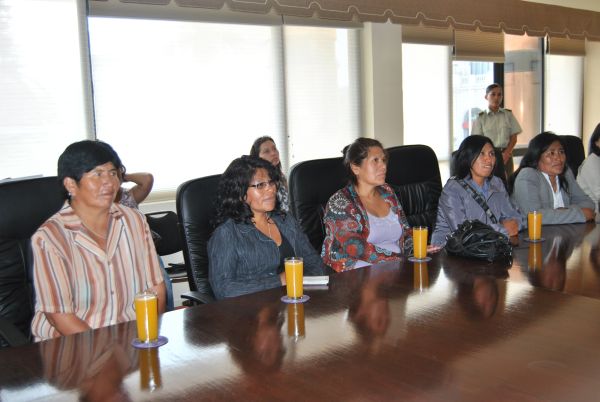
Three indigenous communities from the Chilean highlands have just received solar panels, which will be set up and maintained by unlikely solar engineers: five native women who travelled halfway around the world to India and overcame language and other barriers to bring photovoltaic energy to their villages. Luisa and Liliana Terán are cousins from Caspana, an Atacameña indigenous community; Elena Achú and Elvira Urrelo are from the Quechua village of Ollagüe; and Nicolasa Yufla is an Aymara Indian from Toconce. The three villages, with a combined population of 1,000, are in the Atacama

Peruvian invents drone to measure air contamination

Source:
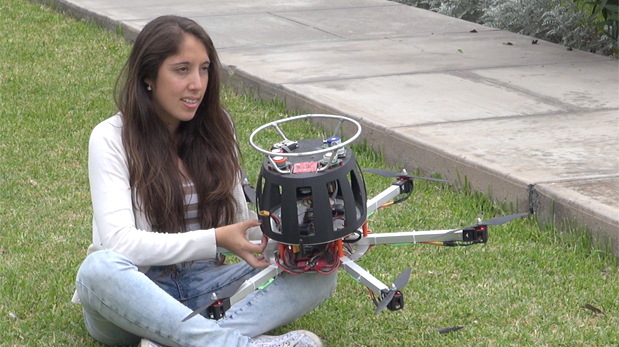
Young Peruvian engineer, Monica Abarca, recently won the Global Impact Competition for her creation of a drone that detects air contamination. “The drone was designed from scratch as part of my thesis,” Monica said. “Its mission is to measure contamination (through gas and particle sensors) and radioactivity.” Monica explained that drones could replace stationary facilities at mines used to measure contamination. They would cover a greater distance, detect air quality faster and more effectively, as a way to protect nearby villages.

Peru’s women are breaking the code

Source:
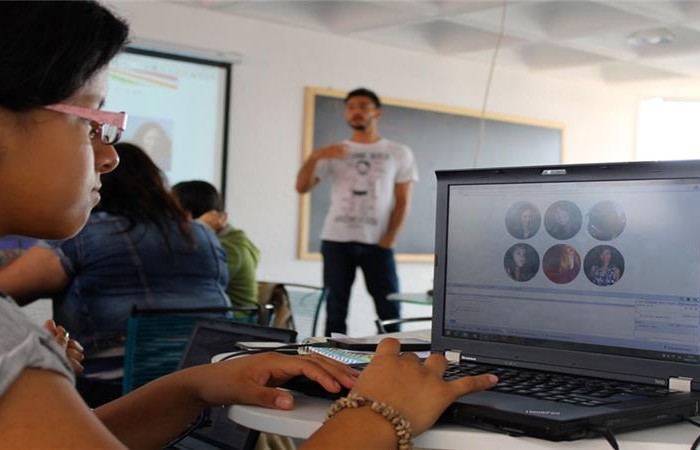
Dozens of young women are zealously tapping away at laptops for a four-month primer in software development. Hailing from the underprivileged margins of Lima, the 35 students in the class - all female - are taught JavaScript, CSS, and English-language programming terminology for a fee of $16 a month. This year, it expects to teach about 100 young women whose average age is 20. Though less than a year old, La Laboratoria has already wooed more than $150,000 in grants from sponsors such as Google and telecom firm Telefonica. Peru's tech sector, which has been expanding between 10 and 15 p

Read the world's local women's news


How does Femina work?

  • Step 1
    1
    Local Country Editors From Around the World
  • Step 2
    2
    Choose News Articles From Their Countries’ Local Language Papers
  • Step 3
    3
    Summarize & Contextualize The Stories In English

Got it!

Swipe for more Top Stories


Got it!