Do women lead, connect and share differently? Subscribe for the latest stories.

Women Haven’t Had Their Own Ticker-Tape Parade Since 1960

Source:
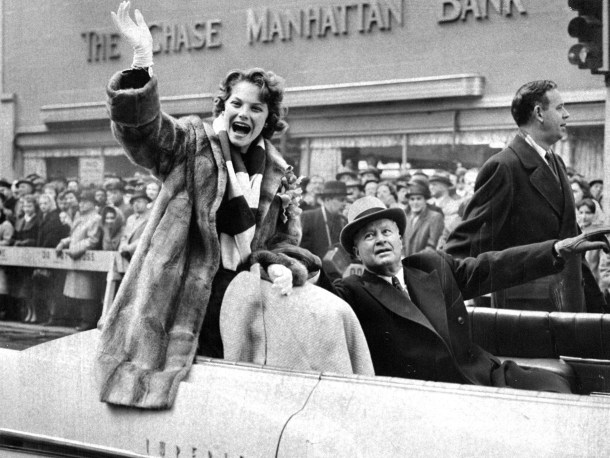
Friday’s ticker-tape parade in honor of the U.S. women’s national soccer team, which won the World Cup on Sunday, is the first such parade in New York to honor exclusively women since 1960. That’s when Carol Heiss received the ticker-tape treatment in honor of her figure-skating gold medal at the 1960 Winter Games. The most recent parade in which a woman was included took place in 1998, when Chiaki Mukai was honored along with the rest of the crew of the Space Shuttle Discovery.
Iranian and Afghan women: then and now

Source:
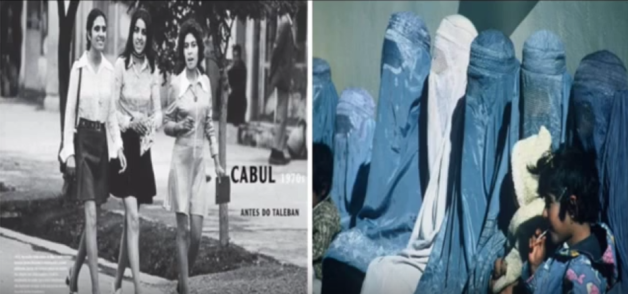
Reader John W. sent me the photo below, showing women in Kabul in 1970 and the present, clearly meant to underscore the religously-induced difference in dress. But of course those photos could be cherry-picked.  Then I remembered that, at her talk in Vancouver, Maryam Namazie, discussing the burqa, also said that since her youth, women in her Iranian homeland have been increasingly swathed and covered according to the dictates of Islam. So I simply did a few Google Image searches, and show in each case the first four rows of photos. I make no claim that these photos are a random s

Japanese historians release statement, arguing comfort women were forcibly recruited

Source:
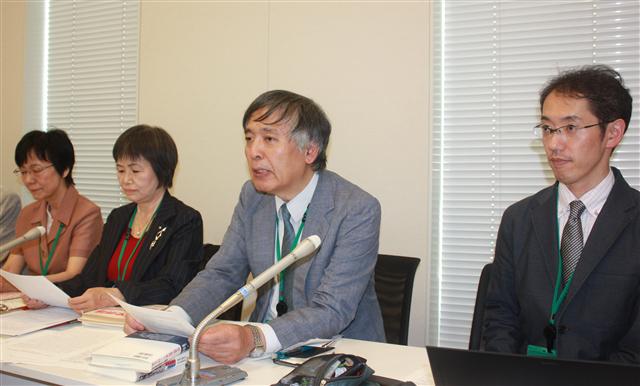
Sixteen Japanese historical research organizations issued a joint statement declaring that the comfort women were recruited “against their will” and that this must be seen as “forced recruitment.” This represents a direct rebuttal of the administration of Japanese Prime Minister Shinzo Abe, which has been distinguishing “compulsion” from “forced recruitment” in an attempt to avoid legal responsibility. On May 25, the Japanese Historical Society and 15 other Japanese historical organizations held a press conference at the second councilors’ hall at the Japanese Diet in T

Voting feminist: A century after women’s suffrage, why are we refusing to cast our ballot?

Source:
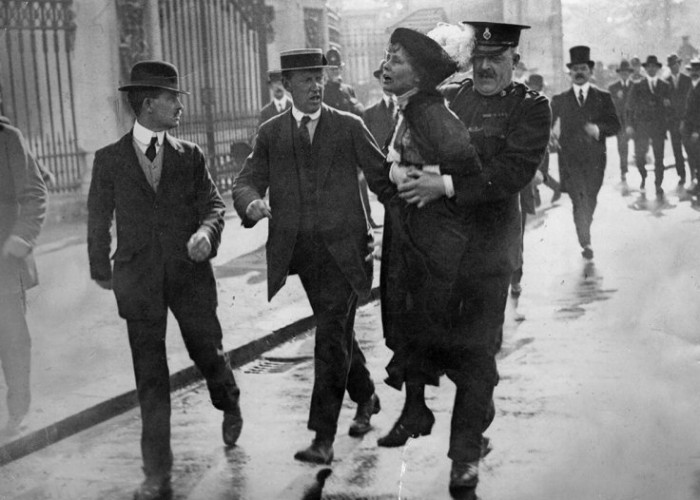
The suffragettes fought tooth and nail to secure the vote for women at the turn of the 20th century, shaking society into a new way of thinking from which there could be no return. Emmeline Pankhurst, one of the most recognisable names in the women's suffrage movement, assaulted police officers, heckled politicians and committed arson, all in protest of the government's refusal to let women vote. And in 1909, Emily Davison was sentenced to a month of hard labour in prison for throwing rocks at chancellor David Lloyd George; four years later she threw herself under King George V's horse, dy

Read the world's local women's news


How does Femina work?

  • Step 1
    1
    Local Country Editors From Around the World
  • Step 2
    2
    Choose News Articles From Their Countries’ Local Language Papers
  • Step 3
    3
    Summarize & Contextualize The Stories In English

Got it!

Swipe for more Top Stories


Got it!