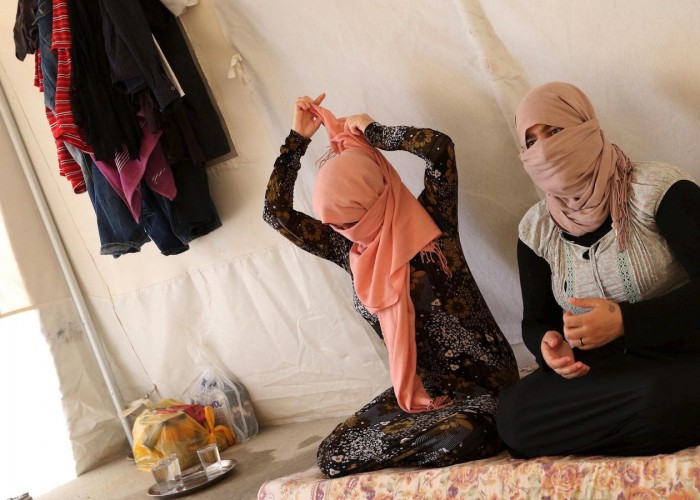
Meet the creator of a secret network of women’s shelters in Iraq

Source:
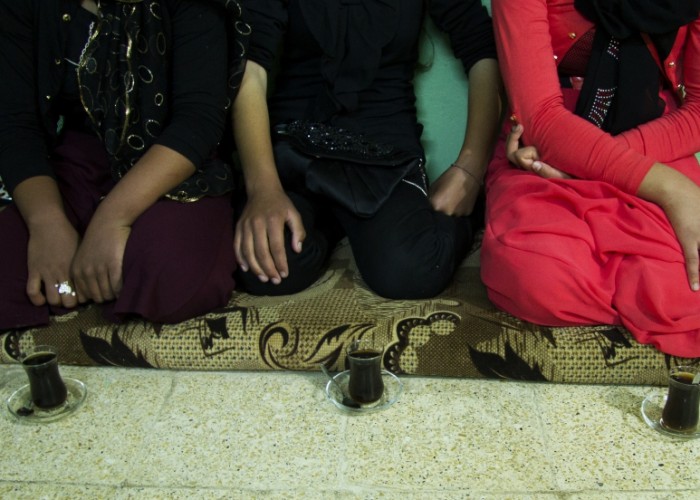
When an Islamic State fighter stopped their car in Anbar Province, Iraq, Safiyah knew something terrible was about to happen. Her husband, a soldier in the Iraqi Army, had been executed days earlier in Tikrit, and she knew the only way to protect their four daughters now was to flee the city. They had been heading for the city of Kirkuk when their escape was cut short. An armed man forced Safiyah’s driver from the car. Then, with the help of other Islamic State fighters, he dragged the four girls, between the age of 16 and 23 years old, to a truck. Safiyah was left behind, too old to be s
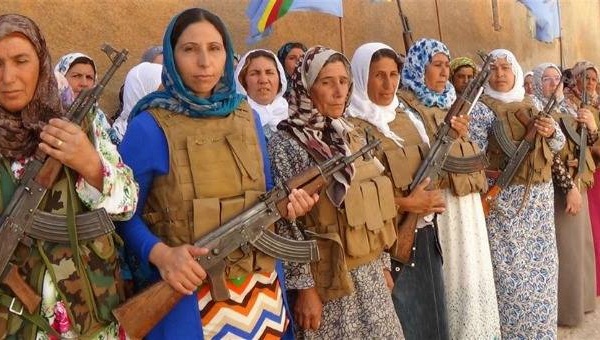
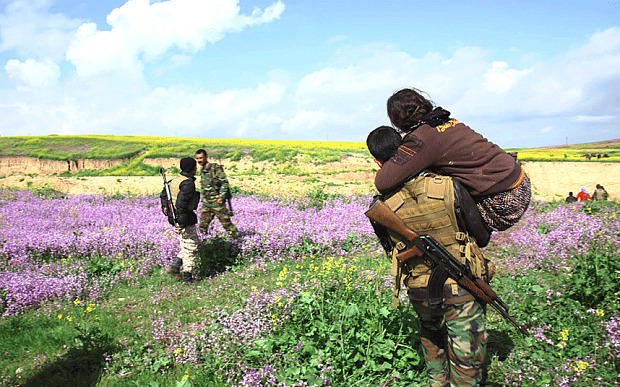
Kurdish Women’s Radical Self-Defense: Armed and Political

Source:
For women, self-defense is further a matter of life or death: The Yazidi women of Shengal (Sinjar), who are portrayed as passive, pitiful victims by the reckless media, now reject being essentialized as rape victims and have, similar to YJA Star (women’s army of the PKK) and the YPJ, the Women’s Defense Forces in Rojava, built their own autonomous women’s army called YPJ-Shengal, the self-defense force of the Yazidi women, parallel to their emerging autonomous self-governance structures.

This man risks his life every day to rescue kidnapped women from Islamic State

Source:
During the siege of Mount Sinjar last August, thousands of men were brutally murdered over a matter of weeks. But amid the slaughter, the Islamic State of Iraq and the Levant (Isil) terrorists chose a different fate for the women of the town. Women from every house were taken hostage, with Isil fighters grabbing thousands of young girls and elderly grandmothers in the largest single kidnapping of women this century. After the attack, those who survived faced the seemingly impossible task of trying to rescue their women from Isil territory. No government has offered to infiltrate I

Yazidi Women Welcomed Back to the Faith

Source:
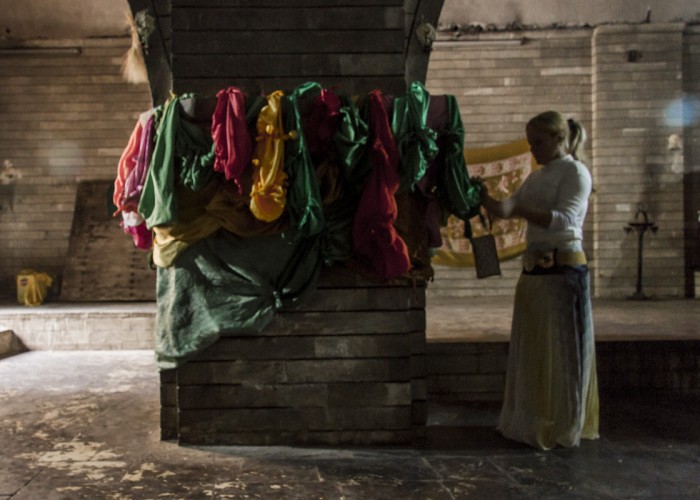
Converting to another religion, even under duress, was long considered an unpardonable sin in the Yazidi religion. But in the wake of the mass abductions, forced conversions and the rape of Yazidi women and girls by militants starting in August 2014, that view has softened. Religious and social Yazidi leaders have issued new teachings since last August, calling on the community to welcome back the abducted women. Sitting in her tent in a camp on the outskirts of Dohuk, Leila (a pseudonym used to protect her privacy) spoke with little emotion. Requesting that no men be present, a testament to

Yazidi society changes to try and rescue a generation of traumatized women

Source:
Lalish absorbed hundreds of refugees after ISIS fighters captured Mosul a year ago and advanced across northern Iraq. And now, hundreds of women and girls once imprisoned by ISIS are also visiting this site to be baptized back into their faith — a faith with roots stretch back to the religions of ancient Mesopotamia. The Yazidi faith is insular: The religion accepts no converts and, before ISIS arrived in Iraq's Yazidi heartland in August 2014, anyone who converted to another religion — even under duress — was cast out of the community. But ISIS fighters kidnapped thou

Iraq’s female citizens: prisoners of war

Source:
On the second day of the Nobel Women’s Initiative conference on building global support for women human rights defenders, the 100 participants delivered a sobering and urgent message: history is still repeating itself. Watching the military-industrial complex wreak havoc in the Middle East, reflected Shirin Ebadi, holder of the 2003 Nobel Peace Prize, is like ‘rewinding a movie’. Women human rights defenders from across the globe were in agreement: the incalculable suffering of the people of Iraq, Afghanistan and Syria have taught us, once and for all, that bombs lead to suffering, and n

Contemporary Islamic views support reform in favor of women

Source:
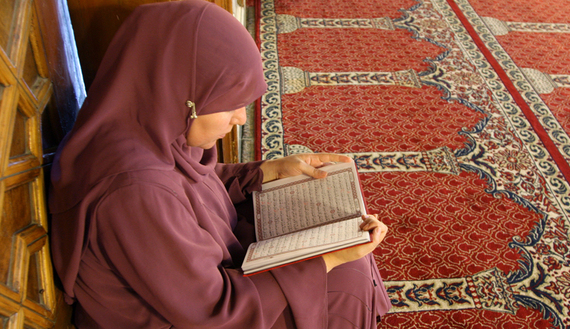
In the 20th century and until its peak in the 1970s, religious feminist movements based on nonpatriarchal interpretations of holy texts started appearing in the world. These movements were different from the prevalent secular female currents in the West in that they opted for a religious discourse founded on the texts of clerics, using religious reasoning within the framework of theological and jurisprudential discourse. This phenomenon, which was not limited to Muslims but included Christian and Jewish communities, among others, came to be known as feminist theology. Islamic feminism