Women in science: Smashing glass ceilings and glass walls

Source:
A woman engineer who worked on the moon landing spoke this week of how she was once told the control room was no place for women. Things have changed a lot in 50 years, but not as fast as some had hoped. BBC News spoke to five scientists from different generations who are breaking barriers in their field. Famous for discovering the first pulsar more than 50 years ago, Prof Dame Jocelyn Bell Burnell has also been a lifelong advocate of women in science. As a school pupil in Northern Ireland in the 1950s, like other girls she was not permitted to study science until her parents (and others

Women in Science: Meet the Stemettes star inspiring more girls into STEM

Source:
If there was ever someone to inspire girls into science, Anne-Marie Imafidon is the woman for the job. Imafidon is the co-founder of Stemettes, an award-winning social enterprise encouraging girls into the fields of science, technology, engineering and maths, and she has an intimidating CV. Having passed GCSEs in maths and ICT aged 10, she holds the current world record for the youngest girl ever to pass an A level in computing – she was 11. Two years later, she received a scholarship to study maths at a top US university. Imafidon then went on to become one of the youngest to be awarded

Female physicist overlooked for Nobel Prize finally receives recognition as Woman of the Year

Source:
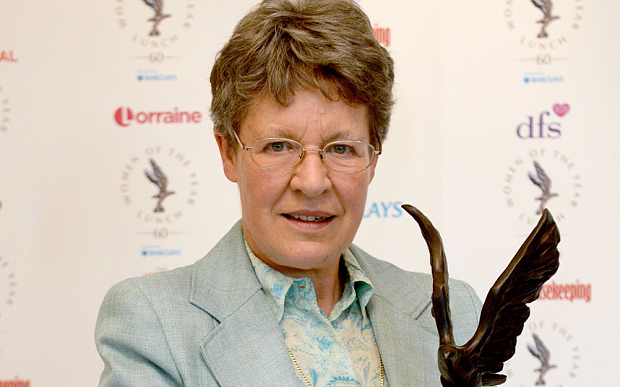
A female astrophysicist who was overlooked for a Nobel Prize in favour of two men who worked alongside her has been named one of the Women of the Year. Dame Jocelyn Bell Burnell is widely acknowledged to have made one of the greatest astronomical discoveries of the 20th century, when she detected the first radio pulsar, a kind of neutron star, in the late 1960s, as part of a postgraduate research project. While her supervisor, Antony Hewish, and another researcher, Martin Ryle, went on to collect the Nobel Prize for Physics, in 1974, for the discovery, Bell Burnell missed

Foremost Geneticists: Mary Lyon obituary

Source:
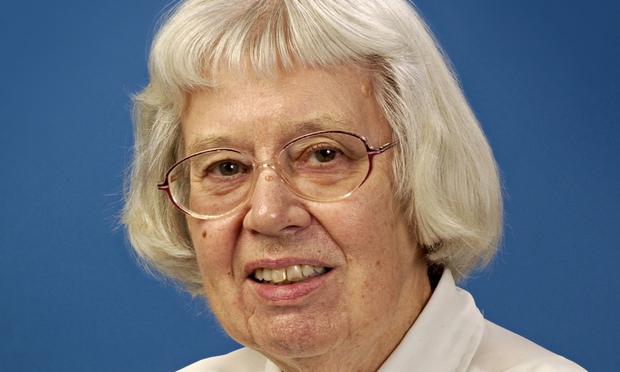
Mary Lyon, who has died aged 89, was one of the foremost geneticists of the 20th century. She used the mouse as a powerful genetic tool to gain fundamental and profound insights into mammalian genetics and the genetic bases of disease. Perhaps her greatest achievement was to propose in 1961 the theory of X chromosome inactivation, in which she suggested that one of the two X chromosomes in the cells of female mammals is randomly inactivated during early development. This process is now sometimes referred to as Lyonisation, and the theory has had a fundamental impact on research into mammali