Asia’s Women Crack Glass Ceiling, But Fail to Break Through

Source:
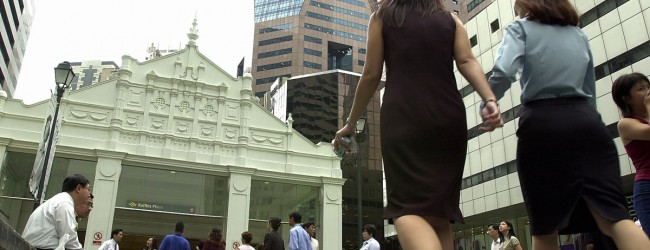
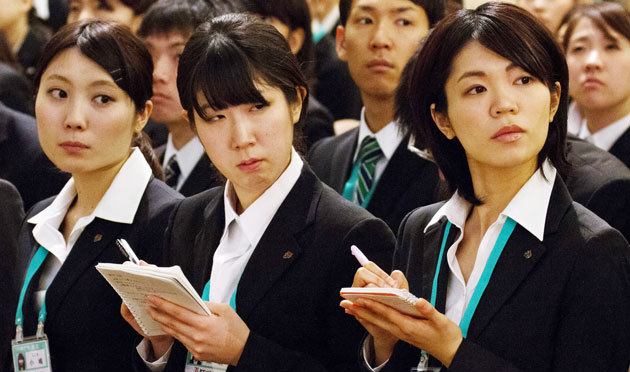
Asia's women are taking one step forward, two steps back when it comes to gender equality. Family structures and entrenched notions of what constitutes women's work are holding back the region's female population from scaling the corporate ladder, according to the International Labor Organization. The proportion of women graduates who studied construction, engineering and manufacturing has stagnated or even fallen in some countries, including Malaysia, Mongolia and Japan, UNESCO data shows.
Women Must Get Pregnant ‘On Schedule,’ Chinese Company Tells Staff

Source:
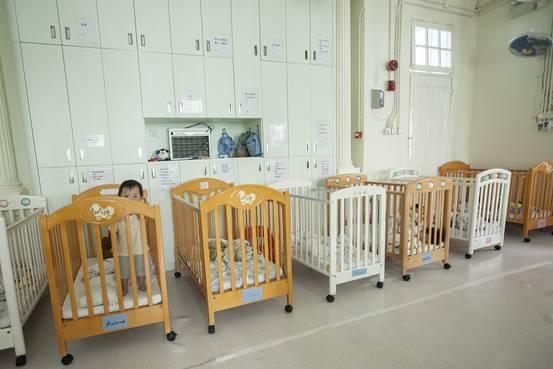
How much say should an employer have over when — and whether — an employee gets pregnant? That’s the question Chinese Internet users were debating Friday after a controversial notice from a company in central Henan province to employees went viral on China’s social networks. According to the notice, a copy of which was published online by the Dahe Daily provincial newspaper, married women working at the Jiaozuo city credit cooperative must be on the job for one year before they are allowed to apply to have a child. They must also schedule their pregnancy in advance so as no

Low representation of women on boards in Singapore: Survey

Source:
The representation of women on corporate boards in the Republic is lower than the global figure, according to a report released on Wednesday (Jun 24) by Deloitte Global. In Singapore, women take up 9 per cent of board seats, the survey revealed. This is lower than the global percentage, where women hold 12 per cent of board seats. However, the percentage of women Singapore holding leadership positions in the boardroom is higher as compared to the global percentage. Women make up 7 per cent of board chairpersons in Singapore, while women make up 4 per cent of board leaders globally.

Only one of Japan’s top executives is female – and she’s not even Japanese

Source:
More bad news for working women in Japan: only one of the country’s top firms employs a female executive, and she’s a white American woman who resides in New York City. Bloomberg looked specifically at corporate executives working for firms listed on the Nikkei, a stock index that is essentially the Dow Jones for the Tokyo Stock Exchange. The report found that Nicole Seligman, president of Sony Entertainment and Sony Corporation of America, was the only woman in a pool of 185 executives making at least JPY 100 million (US$980,000). According to a recent study by Catalyst, a nonprofit

Chinese Women’s Chances of Busting the Glass Ceiling? 1 in 15, Report Finds

Source:
Chinese women are being hindered from advancing in their careers by cultural and organizational beliefs, according to new report from consultancy Bain & Co. The report, which surveyed 850 men and women in China, found that due to family pressures and workplace biases favoring men, women hold less than 10% of executive-level jobs in China and have a one-in-15 chance of reaching a company’s highest executive levels. The derailment may be affecting corporate competition, said Michael Thorneman, managing partner of consultancy Bain & Co.’s China division. Companies operating in Chin

White collar crimes up among women in major Chinese city

Source:
White collar crimes are on the rise among Shenzhen women, according to China’s Municipal People’s Procuratorate. For the first time, it has released three years of data on female white collar crimes in the city. Prosecutors blame the trend on the lack of love from families. A high number of the cases from 2012 to 2014 involved bribery, graft, embezzlement, and smuggling. The perpetrators were of all ages and education levels, and they tended to work in finance, accounting, and other positions that dealt directly with money.

Women not getting jobs no matter how hard they try

Source:
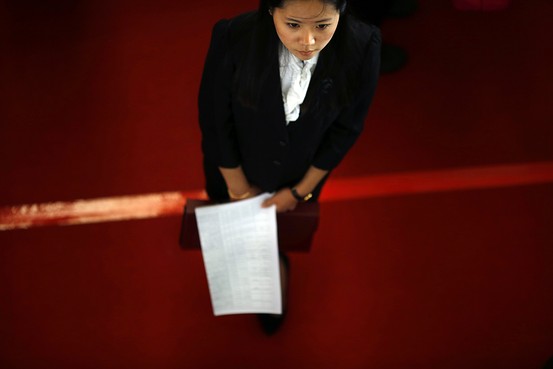
90 percent of female students in China feel there is gender discrimination in the job search process, according to the committee of the Chinese People’s Political Consultative Conference (CPPCC), the political advisory body of China. The Central Women’s Committee of China Democratic League conducted a special investigation at 21 universities in Beijing and Tianjin as well as in five provinces. Two thousand graduating female students were interviewed. The young women submitted an average of 34 resumes; 20 percent did not get an interview call. The survey found that sending more resum