







Women in chess: the role of innate-ability beliefs
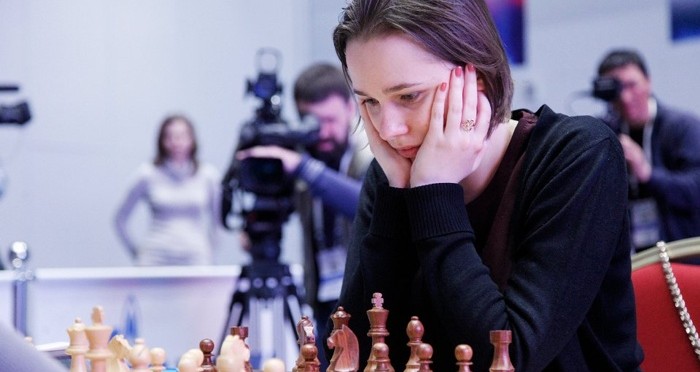
Gender differences in chess achievement were recently thrown into the spotlight once again, by a rather sardonic article by Nigel Short. Since the available statistical evidence indicates that gender differences in achievement are largely or entirely due to differences in participation (Chabris and Glickman, 2006, summarized here; Bilalic et al., 2009), the causes of this participation gap should be the primary focus of attention. Even if, like Short, one does not believe those studies, the participation gap might be of interest in its own right.
Much has been written about why far fewer women than men play chess, including on this site by Natalia Pogonina and Peter Zhdanov, (here, here, here and here) and most recently by Nisha Mohota. Although these articles have brought up highly plausible mechanisms, the debate would be aided by having more hard data available. In particular, wouldn’t it be great to have a large data set about the chess world in parallel with data about similar fields that have more female participation, so that possible causes of the participation gap can be tested for?
The bad news is that it is difficult to find many mind sports that are comparable to chess in terms of popularity and organization. The good news is that such a comparison can easily be made in academia, where different disciplines have widely different proportions of women.


