







Unparalleled Changes for Tibetan Women
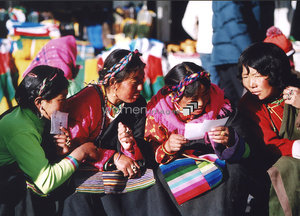
“Over the past more than half a century, women in Tibet have enjoyed higher status from once being seen as a jinx to becoming respected individuals. They used to work in cowsheds but now they can enter temples,” Vice-President of the Tibet Autonomous Region’s Women Federation Zhang Lirong said on September 2 in the capital city of Lhasa.
According to official statistics, there are about 15 million women in Tibet, making up 49.1 percent of its total population. 2015 marked the 50th anniversary of the establishment of the Tibet Autonomous Region and Tibetan women have enjoyed an overall improvement in status during the past decades.
“It is widely known that serfs and slaves suffered a lot under the feudal serfdom in old Tibet, but it is rarely understood that it was women that suffered the most poignant tribulation and affliction,” said Zhang.
Before the Democratic Reform of 1959, the 13-Article Code and the 16-Article Code that had been practiced in Tibet for centuries divided people into three classes and nine ranks. Women were classified into even lower classes, lumped together with blacksmiths, butchers, and beggars.


