Do women lead, connect and share differently? Subscribe for the latest stories.

Obama announces new rules to help ensure women are paid equally

Source:
The Obama administration on Friday issued a proposal that would require private businesses to submit more data about how their employees are paid, in a bid to help address the wage gap between men and women. The Equal Employment Opportunity Commission's plan would require all employers with 100 or more employees to provide the agency with additional information on employee pay broken down by gender, race and ethnicity.

Tax reduction for employers hiring female employees

Source:
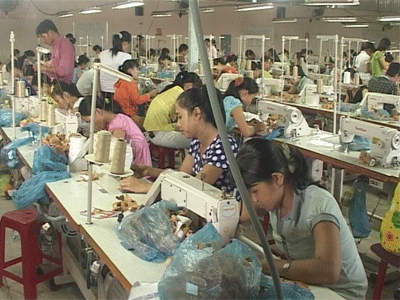
In a bid to improve the employment prospects of women, tax cuts will be applied to employers hiring women, starting Nov. 15, 2015 in Viet Nam. As clarified in the Labor Code changes, the new policy will apply to companies that are employing from 10 to 100 women accounting for more than 50 percent of the total work force, and those with 100 to 1,000 female employees accounting for over 30 percent of the total staff. Enterprises with over 1,000 women working there will also benefit.

How advancing women’s equality can add $12 trillion to global growth

Source:
Gender inequality is not only a pressing moral and social issue but also a critical economic challenge. If women—who account for half the world’s working-age population—do not achieve their full economic potential, the global economy will suffer. While all types of inequality have economic consequences, in our new McKinsey Global Institute (MGI) report, The power of parity: How advancing women’s equality can add $12 trillion to global growth, we focus on the economic implications of lack of parity between men and women. A “best in region” scenario in which all countries match

Birthrate among U.S. women rises for first time in seven years

Source:
Here's another sign that the economy is rebounding: More people are having babies. The rate of births among women ages 15 to 44 ticked up 1% from 2013 to 2014. That's the first increase since 2007, the beginning of the recession, according to a study released Wednesday by the National Center for Health Statistics. The 3.98 million total births in 2014 were the most since 2010. Carl Haub, a senior demographer for the Population Reference Bureau, said he wasn't surprised by the federal findings. Though the increase in fertility rate is small, he said, it could be indicative of a shiftin

Women should not leave the workforce after having children, Tasmanian governor says

Source:
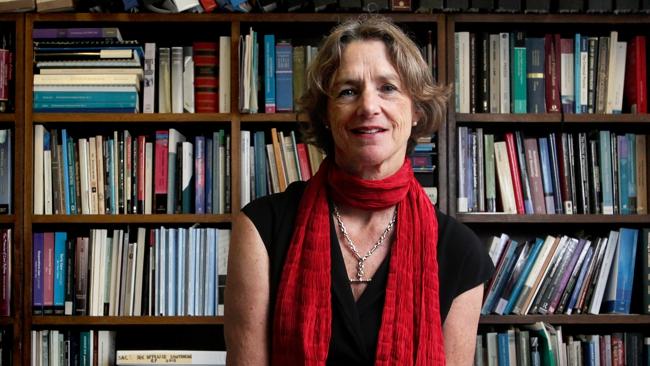
The Tasmanian governor has warned women not to drop out of the workforce entirely after having children. Governor Kate Warner was speaking at a luncheon in Hobart on women's economic empowerment. Ms Warner's address examined the economic impact of gender inequality, the link between gender inequality and violence against women, and the importance of tackling rigid gender stereotypes. She was also asked what advice she would give the other women in the room. "Get a decent education is first, but don't stop at that," she said.

Flashback: A Harvard Professor Explains How Women Can Negotiate Better

Source:
Hannah Riley Bowles, a professor at Harvard’s Kennedy School of Government, has studied gender in the workplace extensively. In a recent article in the Harvard Business Review, she laid out the current state of research into differences between how men and women negotiate over salary, and how they are treated when they do. And these differences are sizable, she writes, since “in most published studies, the social cost of negotiating for pay is not significant for men, while it is significant for women.” In other words, women sometimes lose, even when they win — they may get the pa

Striker Rights Roil Chile as Bachelet Tries Erasing Pinochet

Source:
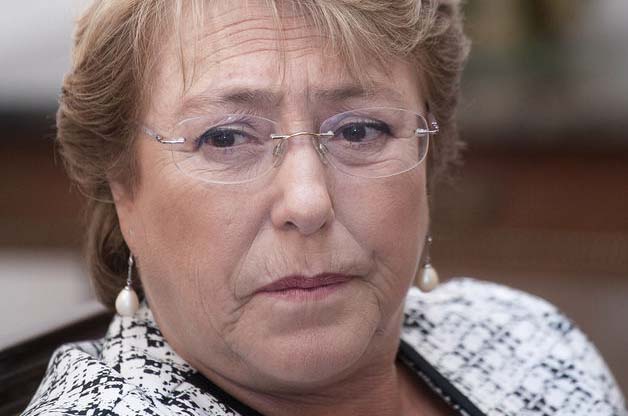
Chile is one of only four countries in the 34-member Organization for Economic Cooperation and Development, including the U.S., that allows companies to replace striking workers, thanks to labor laws drawn up during the 1980s when dictator Augusto Pinochet was still in power. Thirty-five years later, President Michelle Bachelet says it’s time for Chile to repay an historic debt to workers and is backing a bill to ban the practice and boost the power of labor unions. The proposed draft has sparked controversy among businessmen, academics and some legislators, who question what “debt” s

A quarter of young women earn more than their partner

Source:
Women aged 18 to 24 are most likely to earn more than their significant other, with 25% of UK households in this age category having a female breadwinner. For ladies aged between 35 and 54, the percentage drops to 21%, which is still higher than the national average of 20%. Women over the age of 55 are least likely to earn more than their partners, with just 16% of households seeing a female bring in the highest salary. Some 22% of households see each partner bring home a similar income, while half of households have a male breadwinner, according to insurer LV=, which compiled the dat

Japanese women push back against leaning in

Source:
The Japanese government wants more women to participate in the workforce. In fact, following December 2014 elections, one the new government's slogans has become “Women Will Revitalize Japan.” While this may seem like a victory for gender equity in what has traditionally been a male-dominated society, many Japanese women are worried they are simply being asked to do more for less. Just 65 percent of women aged 15 to 64 work in Japan, compared to nearly 85 percent of Japanese men. According to the 2013 World Economic Forum's Global Gender Gap report, Japan, ranked 105th out o

More U.S. Women Are Going Childless

Source:
Some Americans may now prefer life without children, though most still report in surveys that they want two kids. Others may be struggling to have children, or can’t afford expensive fertility treatments. Juggling work and family is a big factor. Census said women aged 40 to 50 years who were in managerial or professional occupations were more likely to be childless than women of similar age in other occupations. With more women having their first child in their mid 30s, late 30s and early 40s, American families may be shrinking: The number of women aged 40 to 44 who had only one child

The Global Gender Gap Report 2014

Source:
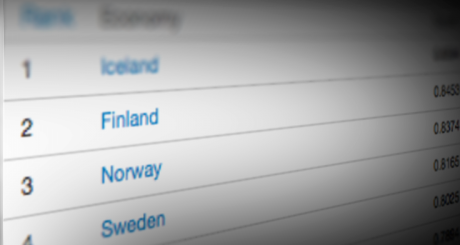
Through the Global Gender Gap Report 2014, the World Economic Forum quantifies the magnitude of gender-based disparities and tracks their progress over time. While no single measure can capture the complete situation, the Global Gender Gap Index presented in this Report seeks to measure one important aspect of gender equality: the relative gaps between women and men across four key areas: health, education, economy and politics.   Country Rankings: Only the top 10 Score 1 Iceland 0.8594 2 Finland 0.8453 3 Norway 0.8374 4 Sweden 0.8165

Will Women Billionaires Make Better Philanthropists?

Source:
It’s a rich moment for women in big-ticket philanthropy. Sara Blakely, founder of the privately held Spanx, just became the first self-made female billionaire to sign onto The Giving Pledge, an effort spearheaded by Bill and Melinda Gates and Warren Buffett that has had dozens of the world’s billionaires sign on to give away more than half of their wealth, either during their lifetime or after their death. Another member of the still tiny circle of female billionaires, Steve Jobs’s widow, is stepping out publicly for the first time as a philanthropist. Steve Jobs was criticized for n

Lagarde says IMF to co-operate with China-led AIIB bank

Source:
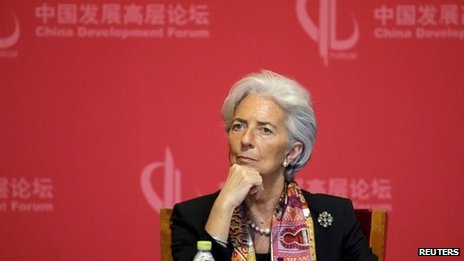
International Monetary Fund chief Christine Lagarde has said the IMF would be "delighted" to co-operate with the China-led Asian Infrastructure Investment Bank (AIIB). The AIIB has more than 30 members and is envisaged as a development bank similar to the World Bank. Mrs Lagarde said there was "massive" room for IMF co-operation with the AIIB on infrastructure financing. The US has criticised the UK and other allies for supporting the bank. Mrs Lagarde, speaking at the opening of the China Development Forum in Beijing, also said she believed that the World Bank would co-operate with

Read the world's local women's news


How does Femina work?

  • Step 1
    1
    Local Country Editors From Around the World
  • Step 2
    2
    Choose News Articles From Their Countries’ Local Language Papers
  • Step 3
    3
    Summarize & Contextualize The Stories In English

Got it!

Swipe for more Top Stories


Got it!