







The Rise of Women’s Transnational Activism: Identity and Sisterhood between the World Wars, by Marie Sandell
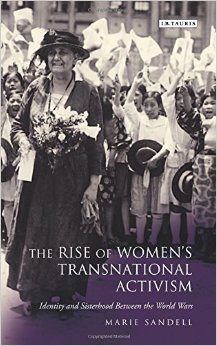
This valuable work sheds light on the building of an ‘international sisterhood’ to further the struggle for women’s rights, says June Purvis
Recent years have witnessed the rise of transnational perspectives in studies of the “first wave” of the women’s movement. Leila Rupp’s groundbreaking 1997 work Worlds of Women: The Making of an International Women’s Movement explored the growth and nature of international women’s organisations from the 1880s to 1945. In this clearly written, informative book, Marie Sandell builds on Rupp’s pioneering research, and focuses on international women’s groups in the understudied interwar years.
It is easy to forget that the struggle for women’s rights in the 19th and early 20th centuries involved efforts at the international as well as the local and the national levels. Indeed, by the end of the First World War, there were three major international women’s groups concerned with improving the status of women – the International Council of Women (founded in 1888), the International Alliance of Women (1904) and the Women’s International League for Peace and Freedom (1915). Their memberships were largely educated upper- and middle-class North American and European women, with non-Western members drawn from Westernised elites.


