Do women lead, connect and share differently? Subscribe for the latest stories.

Dealing with the past through feminism

Source:
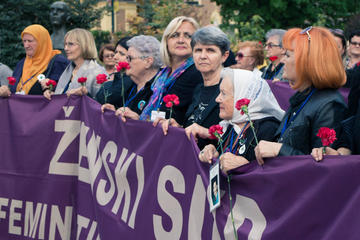
The Sarajevo Women's Court and transitional justice in the former Yugoslavia: preliminary reflections Since the end of the wars of the 1990s, the post-Yugoslav countries have become, as famously stated by Eric Gordy and Jasna Dragović-Soso, a laboratory of transitional justice. The region featured the first International Criminal Tribunal (ICTY) to be ever established, one of the first mixed courts (the Court of BiH) created by international and domestic institutions together, several attempted truth and enquiry commissions, among which the first bottom-up initiative worldwide to f
Bosnia – Women’s Court to Demand Justice for War Crimes

Source:
On May 7, the Women's Court on war crimes against women during the war in the former Yugoslavia in the 1990s formally started in Sarajevo, Bosnia, according to a press release distributed by the WUNRN listserve. Women have come together from all the corners of the former nation to demand justice for the crimes committed against them during the wars and the enduring inequalities and suffering that followed. The composition of the organizational committee includes women across the national divides that came with the partition of the former Yugoslavia: from Bosnia and Herzegovina: Mothers o

Women’s Tribunal, Sarajevo 2015

Source:
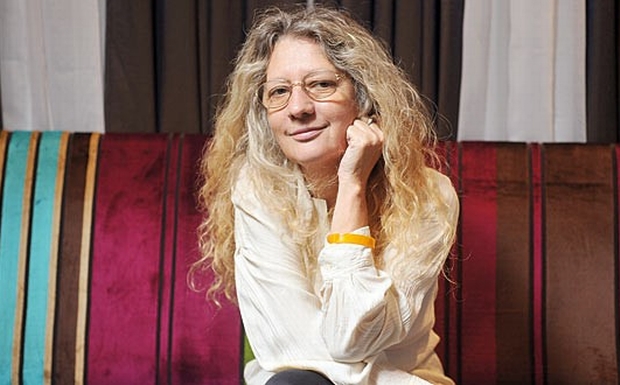
I am a Woman in Black from Belgrade.  I was one of the organizers of the the first feminist conference in East Europe, Drug-ca Zena in 1978 in Belgrade.  I am also the author of  "The Diary of the Political Idiot," maybe the first war diary written by a woman distributed over the Internet. In 2005, I happened to be in New York at the UN Conference. Beijing Ten Years After.   I have to tell you about my very weird, conflictual role there.  On one hand I was representing the group Women in Black Serbia.  On the other at a certain point I became the representative of the Serbian governme

Read the world's local women's news


How does Femina work?

  • Step 1
    1
    Local Country Editors From Around the World
  • Step 2
    2
    Choose News Articles From Their Countries’ Local Language Papers
  • Step 3
    3
    Summarize & Contextualize The Stories In English

Got it!

Swipe for more Top Stories


Got it!