







Israeli and Palestinian women meet despite the checkpoints
At the entrance of Beit Ummar, a red sign in Hebrew, Arabic and English warns Israeli citizens that visiting the Palestinian village could be dangerous for their lives. But on one Saturday evening, four cars with yellow Israeli license plates drive past the warning and a tall military observation tower.
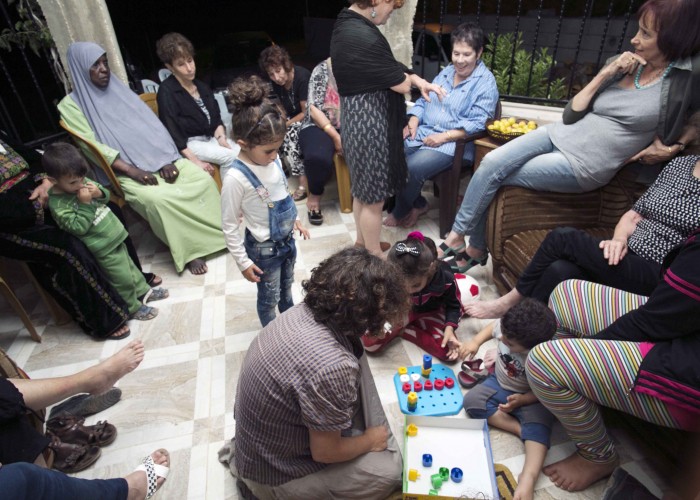
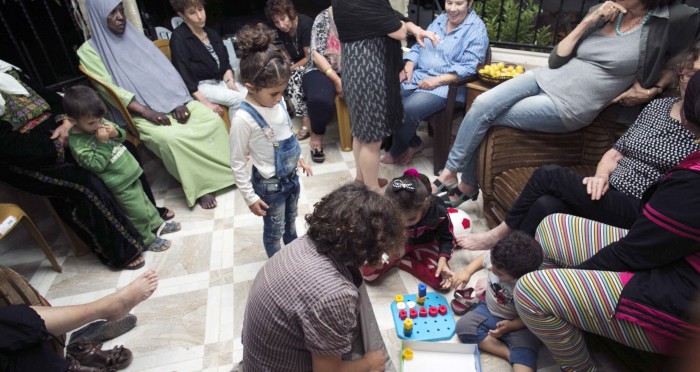
Inside the cars, about fifteen Israeli women, some already past retirement age, are crammed between huge toys for children. The sun is almost setting behind the hills, as the group makes their way through the winding roads. For many of the passengers, it is not their first time in the village. Following the footsteps of an Israeli activist Ilana Hammerman, some of them started smuggling Palestinian women – including from Beit Ummar – for daytrips into Israel.
Hammerman sparked a nation-wide debate in 2010 after she published an article about one such a trip, illegal under Israeli law, on the Israeli daily newspaper Haaretz.
At the end of the village, the group finally reaches the house of Zahra. That is not her real name, though; to avoid troubles, none of the Palestinian women in this article wanted to be identified. In the West Bank, doing anything with the Israelis might come with the derogative label “normalizer”, which is used for people seeking normal relations with the occupying power.


