












Hunger-striking women’s group hopes to bring peace to Israel
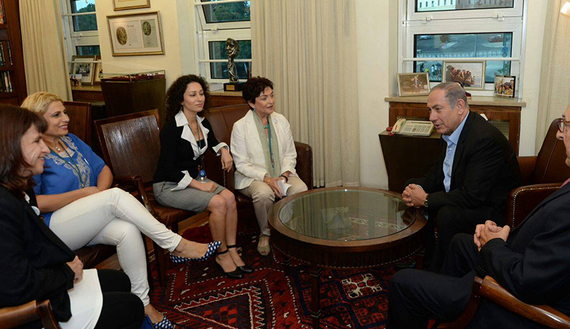
A week after having concluded their hunger strike near the prime minister’s residence in Jerusalem, the activists of Women Wage Peace were invited for a meeting Sept. 1 with Prime Minister Benjamin Netanyahu. The meeting was organized by the premier’s special envoy, attorney Yitzhak Molcho, at the request of one of the movement’s activists and co-founders, retired Justice Saviona Rotlevy. The female activists started their hunger strike on the occasion of the first anniversary of Operation Protective Edge (July-August 2014) and the movement’s establishment. They called on Netanyahu to promote a diplomatic arrangement to end the conflict. The hunger strike lasted for 50 days, similar to the duration of the operation in Gaza last summer. It saw the participation of some 300 men and women who joined the protest in rotating shifts throughout the summer months. Putting the hunger strike in the context of last summer, they dubbed their protest Tzom Eitan (Protective Fast), playing on the operation’s Hebrew code name.
During the protest, the prime minister’s wife, Sara Netanyahu, invited the women into her home, and in the conversation that ensued she asked them where the Palestinian women were. She then advised the female activists to address their protest to Palestinian President Mahmoud Abbas in light of his intransigence and the way he has chosen to boycott Israel.
Ayelet Harel, one of the activists, told Al-Monitor that during the first week of the hunger strike, they were visited at the protest tent by Ziad Darwish and Elias Zananiri, members of the Palestinian Committee for Interaction with Israeli Society, which is headed by Mohammed al-Madani, a member of the Fatah leadership. The two proposed that they meet with Abbas, relating that the Palestinian president had heard of their protest and had been following it. But the members of Women Wage Peace insisted on meeting Netanyahu first before meeting with the president of the Palestinian Authority (PA).


