



Despite being a woman
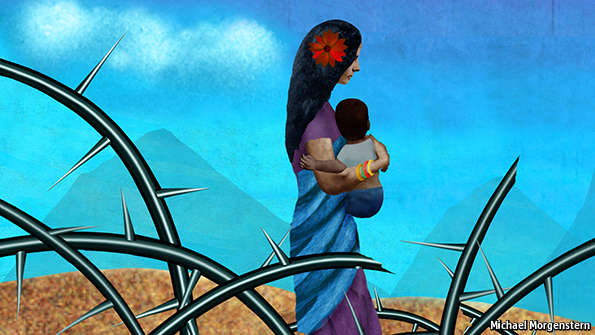
INDIA’s bachelor leader, Narendra Modi, struggles with the opposite sex. Last year he tried to be seen to revere his mother by rushing to her side after his big election victory. But then he failed to invite her to his grand inauguration. He has talked, admirably, about the need to respect women. But he defines “our mothers, daughters and sisters” by their relationships with men and as treasures to protect. It does not help his reputation that, until he was running for the prime ministership, he refused to acknowledge that he has an estranged wife, whom he was forced to marry as a teenager and has not lived with since.
For a man usually so eloquent, Mr Modi occasionally lands his sandalled foot in his mouth: on June 7th he made an especially crass comment during an otherwise successful visit to Bangladesh, praising his host, Sheikh Hasina, the prime minister, for being tough on terrorism “despite being a woman”. Critics back home accused Mr Modi of having retrograde views, typical of those who revere the country as “Mother India” but who treat women atrociously. Yet such attitudes are widely shared, not just in India but across South Asia. The whole region fails to grant women equal respect or opportunities.
That may seem odd, given how prominent a role women play in South Asian politics.


hi!,I like your writing very so much! proportion we keep in touch more about your post on AOL? I require a specialist in this house to solve my problem. May be that’s you! Looking ahead to peer you.