











Damage control in Chile
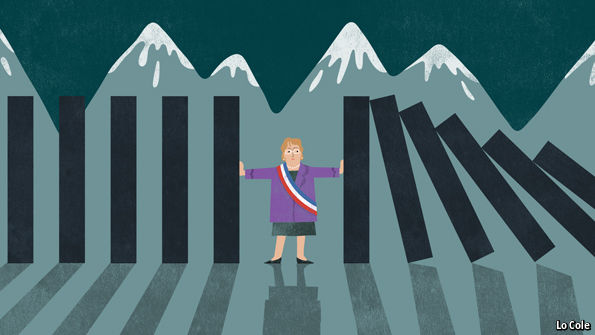
Chile has been badly hit by the end of the commodities boom. But it has also gone further than most of its neighbours in adjusting to a harsher world. The peso has depreciated by around 45% since January 2013, helping to extinguish a big current-account deficit. Low debt and years of macroeconomic rigour mean the government has been able to run an expansionary fiscal policy while the Central Bank’s interest rate, despite an increase this month, is negative in real terms.
For that, supporters of Michelle Bachelet, the Socialist president, blame the outside world. The price of copper, Chile’s main export, has almost halved since 2011, causing mining firms to slash investment. The government’s critics point to the uncertainty caused by Ms Bachelet’s programme of radical reforms which, they say, is destroying the Chilean “model” and the incentive to invest. Chile faces a real risk of losing its way, and for that history may ascribe most of the blame to Ms Bachelet herself.
Ms Bachelet calls the change of tack “realism without resignation”—the Spanish sin renuncia meaning both that she will not resign (as some had speculated) and that she will not resile from her programme.


Wow, this paragraph is fastidious, my younger sister is analyzing these things,therefore I am going to convey her.