









Women in Uganda Can’t Use Toilets Without Fear of Disease or Rape
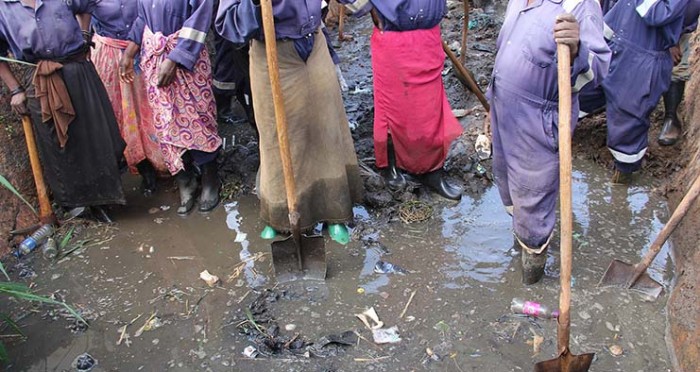
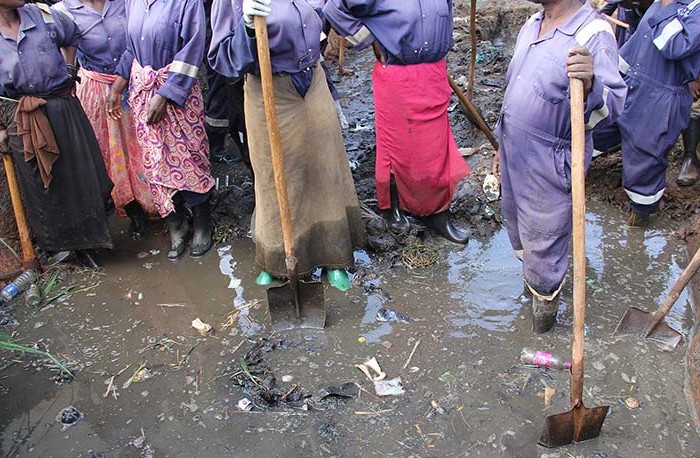
Mary Businge was in the doctor’s seat, diagnosing a patient, when the municipal workers arrived. They were in a foul mood as they rolled up their sleeves and descended into a trench filled with sewage. The trench, stretching across the Nankulabye slum in Uganda’s capital city Kampala, was where the slum’s roughly 40,000 residents dropped their waste: discarded cans, torn shoes, playing cards, cigarette butts, documents, sanitary napkins, and bags containing feces.
When it rained, the acrid water rose like a breathing thing, and so the city government sent their workers to empty the trench. On their last visit, the workers, who went in ankle-deep equipped only with gumboots, latex gloves, and shovels, had found a fetus wrapped in a polythene bag.
Businge, a 52-year-old nurse who runs her medical practice from a room across the trench, wondered how long it would take for the trench to fill up. About a week, she estimated. There were not enough toilets in the slum—each was shared by between ten and 50 people—and they were poorly maintained. If you had a school or office, you could wait to use the toilet there. But if you had to stay home and you were a woman, it was often easier to use a plastic bag at home and fling it into the trench. “We are falling sick every day,” she said in Luganda. “But we are embarrassed to talk about these diseases we get from the toilets. We are ashamed.”


