



Dharavi’s Women Artisans Have A Message – A Strong Message For All
In a bid to create a rather dramatic effect the ‘pallu’ has several patches of hands sown around those words. Even though Anjali can barely read and write she revealed that she had been able to appliqué the stark slogan on the recycled, hand-me-down sari quite effortlessly.
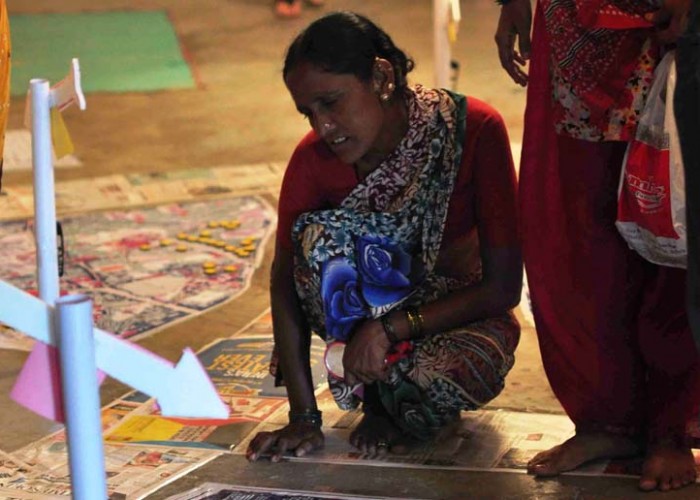
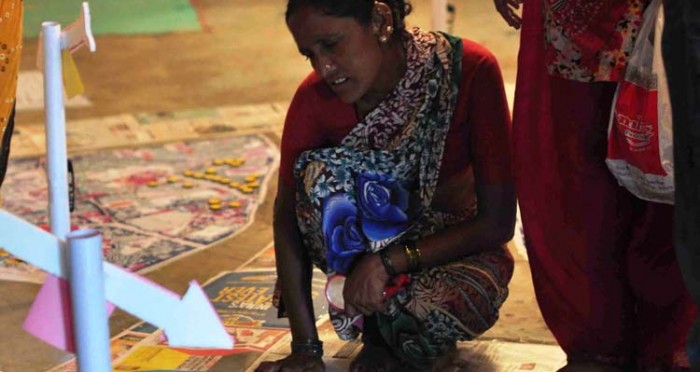
Apart from these bespoke saris there were many other exhibits to enjoy at the recent three-week-long arts and public health festival, ‘Alley Galli Biennale’ held at Dharavi in Mumbai. There were sculptures, installations and pictures, among other diverse expressions of creativity. Each piece made a strong statement and had a unique stamp of exquisiteness. With basic guidance from experts they had all been handcrafted by women and men whose daily lives are otherwise fraught with livelihood struggles and marred by some form of abuse, be it physical, verbal or sexual. Even so, as one looked at them interacting animatedly with the visitors and it was impossible to imagine their other, more painful, existence.
Dharavi, the biggest slum of Asia, is spread over more than 500 acres in central Mumbai and is home to more than a million people belonging to various faiths, economic backgrounds and even multiple ethnicities.


